
How to stay safe when driving at night
As the days get shorter and the evenings grow darker, many of us find ourselves driving in low-light conditions. Whether you’re commuting home from work, heading out for an evening with friends or travelling during the winter months, driving at night can pose some additional challenges.
For some drivers, reduced visibility, glare from headlights and difficulty judging distances can make night-time journeys more stressful and potentially less safe.
According to road safety research, the risk of collisions increases in darkness, particularly for vulnerable road users such as pedestrians and cyclists. With visibility reduced and our eyes working harder to process information, it’s important to take extra care when driving after dark.
Why Is driving at night more difficult?
Our eyes are naturally less effective in low-light conditions. When darkness falls, several aspects of our vision are affected:
- Reduced depth perception: It can become harder to judge distances and the speed of other vehicles.
- Limited peripheral vision: Spotting pedestrians, cyclists and hazards approaching from the sides can be more difficult.
- Reduced colour recognition: Colours become harder to distinguish, making it more challenging to identify objects and potential hazards.
- Slower visual adaptation: During twilight, our eyes are constantly adjusting to changing light levels, which can make it harder to see clearly.
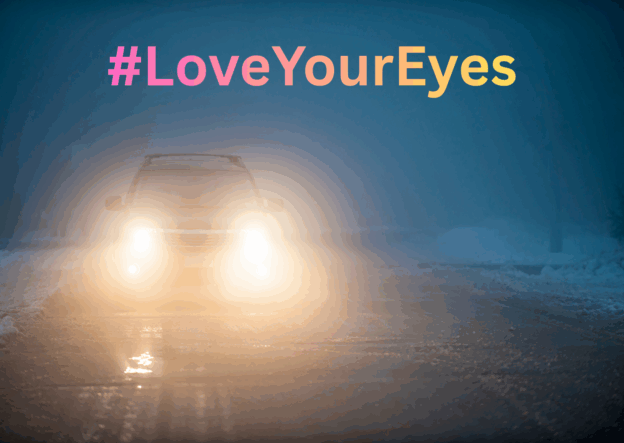
Glare is another major issue for night-time drivers. Headlights from oncoming vehicles, brake lights and reflections from wet roads can all cause temporary visual discomfort and make it difficult to see clearly.
As we get older, our eyes can also take longer to recover after being exposed to bright lights. This means that the glare from an oncoming vehicle can have a greater impact on our ability to see the road ahead.
If you wear prescription glasses, reflections from your lenses can sometimes add to the problem, particularly if your lenses don’t have an effective anti-reflection coating.
The good news is that there are ways to improve your visual comfort and make driving at night easier.
How can the right glasses help with night driving?
Having the right prescription and lens technology can make a significant difference to your driving experience, particularly if you regularly struggle with glare, reflections or visual clarity.
At Walker & Campbell we offer a range of SEIKO lens solutions designed to support different visual needs.
SEIKO DRIVE – Single vision lenses
SEIKO DRIVE single vision lenses are designed specifically with driving in mind. They provide clear distance vision and help minimise unwanted distortions around the edges of the lenses.
This can support a more comfortable visual experience and help you maintain a clear view of the road ahead.
SEIKO DRIVE X – Progressive lenses
If you wear varifocal or progressive lenses, SEIKO DRIVE X may be worth considering.
These lenses are designed to optimise your visual experience while driving, helping you see clearly at different distances, including the dashboard and road ahead.
They offer a practical solution for drivers who need both distance and near vision correction.
SEIKO RoadClearCoat – Helping to reduce glare
SEIKO DRIVE and DRIVE X lenses can be complemented by RoadClearCoat, an advanced anti-reflection coating.
Designed to reduce distracting reflections from light sources, the coating can help improve visual comfort when driving in low-light conditions and adverse weather.
It can be particularly beneficial when dealing with glare from oncoming headlights, street lighting and wet road surfaces.

https://www.opticianonline.net/content/features/driving-lenses-eye-comfort-behind-the-wheel
- Have regular eye examinations
- Make sure your prescription is up to date
- Avoid tinted glasses at night
- Reduce reflections inside your car
- Keep your windscreen and windows clean
- Check your headlights
- Make yourself visible
- Look out for pedestrians and cyclists
8 Top tips for better vision on the road
Alongside choosing the right eyewear, there are several simple steps you can take to make driving after dark safer and more comfortable.
Regular visits to your optician help ensure your eyes are healthy and your prescription is up to date. Your optometrist can also identify changes in your vision that might affect your ability to drive safely at night.
If you wear glasses or contact lenses for distance vision, make sure your prescription is correct. Even small changes can affect how clearly you see road signs, other vehicles and hazards.
Dark-tinted, polarised or photochromic lenses that remain tinted are not suitable for night-time driving. Always use clear lenses that are appropriate for driving in darkness.
Consider dimming your dashboard display and instrument panel to a comfortable level. Excessively bright interior lighting can distract you and make it harder for your eyes to adjust to the darkness outside.
Dirt, smears and condensation can scatter light and increase glare from headlights and streetlights. Clean your windscreen inside and out regularly, and make sure your windows remain clear.
Make sure all your headlights, brake lights and indicators are working correctly. Keep your headlights clean and ensure they are correctly aligned. Remember to dip your headlights when approaching oncoming traffic or following another vehicle.
Use your headlights when visibility is reduced and ensure you can be seen by other road users. In the UK, dipped headlights should be used when visibility is seriously reduced, generally when you cannot see for more than 100 metres.
Take extra care around schools, residential streets, pedestrian crossings and areas with pubs and restaurants. Pedestrians and cyclists can be particularly difficult to spot in darkness, especially when wearing dark clothing. Reduce your speed and allow plenty of room.
Struggling with night driving? We can help
If you find yourself avoiding driving after dark because of glare, blurred vision or difficulty seeing clearly, it may be time to have your eyes checked.
The right prescription and lens technology could make your journeys more comfortable and help you feel more confident behind the wheel.
At Walker & Campbell we’re happy to discuss your individual visual needs and advise whether SEIKO DRIVE, DRIVE X or an anti-reflection coating such as RoadClearCoat could be suitable for you.
Get in touch today.
Call us on 01628 663055 or pop in and see us. We’d be delighted to help you find the right solution for clearer, more comfortable vision on the road.
Drive safely and take care.